Do I need to prime my canvas before using certain painting tools?
Leave a message

Hey there, fellow artists and painting enthusiasts! I'm here as a supplier of top - notch painting tools, and today we're gonna dive into a question that's been bugging a lot of you: "Do I need to prime my canvas before using certain painting tools?"
Let's start by understanding what priming a canvas actually means. Priming is the process of applying a layer of primer to your canvas. Primer is like a foundation for your paint. It creates a smooth surface, helps the paint adhere better, and can even protect the canvas from the paint's chemicals.
Now, when it comes to different painting tools, the answer to whether you need to prime the canvas isn't always straightforward.
Oil Painting Tools
If you're using oil - based painting tools, priming your canvas is almost a must. Oil paints are thick and have a slow - drying time. Without a proper primer, the oil in the paint can seep into the canvas fibers. Over time, this can cause the canvas to rot or warp.
A good primer for oil painting is usually made of gesso, which is a mixture of gypsum and glue. It creates a hard, smooth surface that allows the oil paint to glide on easily. When you use tools like Soft Bristle Paint Brush with oil paints on a primed canvas, you'll notice that the brush strokes are more defined, and the paint doesn't soak into the canvas unevenly. The bristles of the soft - bristle brush can hold more paint and distribute it evenly across the primed surface, giving you better control over your strokes.
Acrylic Painting Tools
Acrylic paints dry much faster than oil paints. So, do you need to prime your canvas when using acrylic painting tools? Well, it depends.
If you're going for a thin, watercolor - like effect with your acrylics, you might not need to prime the canvas. You can use tools like Round Sponge Paint Brush to create soft, blended effects directly on the raw canvas. The absorbency of the unprimed canvas can add an interesting texture to your work.
However, if you're using thick, heavy - bodied acrylics, priming is a great idea. A primed canvas will prevent the paint from cracking as it dries. When you use a palette knife or a large brush to apply thick layers of acrylic, a primed surface provides better adhesion. The paint won't lift or peel off easily, and you can build up multiple layers without worrying about the integrity of your artwork.
Pastel and Charcoal Tools
When it comes to pastel and charcoal, priming can make a big difference. Pastels and charcoal are powdery mediums, and a primed canvas helps them stick better.


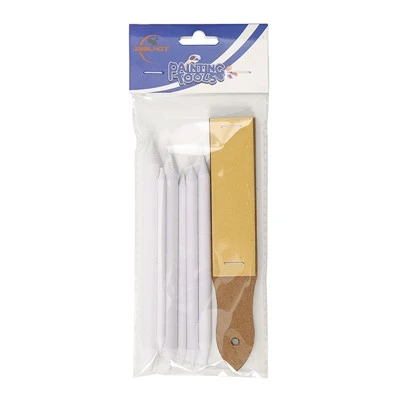
A sanded primer is often recommended for pastel work. The rough texture of the sanded primer grabs onto the pastel particles, allowing you to build up rich, saturated colors. If you're using Sharpening Blending Stumps to blend your pastels, a primed canvas will make the blending process smoother. The stumps can glide across the surface, distributing the pastel evenly without smudging it into the canvas fibers.
Watercolor Painting Tools
Watercolor paints are all about transparency and the way they interact with the paper or canvas. Traditionally, watercolor is done on paper, but if you're using a canvas, priming can be a bit tricky.
A lightly primed canvas can work well for watercolor. It gives you a bit more control over the paint flow compared to an unprimed canvas. You can use fine - tipped brushes to create detailed watercolor paintings. But be careful not to over - prime, as a thick layer of primer can prevent the watercolor from soaking in and creating those beautiful, organic washes.
Benefits of Priming Your Canvas
There are several benefits to priming your canvas before using certain painting tools.
First of all, it improves the longevity of your artwork. As I mentioned earlier, a primed canvas protects against the damage that paint can cause to the canvas fibers. This means your painting will last for years without deteriorating.
Secondly, priming enhances the quality of your painting. It provides a consistent surface, so your paint application is more even. You'll get better color saturation and more defined brush strokes.
Finally, priming gives you more control over your painting process. You can experiment with different techniques knowing that the canvas is prepared to handle them.
When Not to Prime
There are also situations where you might not want to prime your canvas. If you're going for a very rustic or textured look, an unprimed canvas can be a great choice. For example, if you're using a sponge to create a rough, abstract painting, the absorbency of the unprimed canvas can add to the overall effect.
Conclusion
So, do you need to prime your canvas before using certain painting tools? The answer is that it depends on the type of paint and the effect you're going for. As a supplier of painting tools, I always recommend experimenting with both primed and unprimed canvases to see what works best for you.
If you're looking for high - quality painting tools to accompany your primed or unprimed canvas projects, we've got you covered. Whether you need Soft Bristle Paint Brush, Round Sponge Paint Brush, or Sharpening Blending Stumps, we have a wide range of products to meet your artistic needs.
If you're interested in purchasing our painting tools for your next project, feel free to reach out to us for procurement discussions. We're here to help you take your painting to the next level.
References
- Smith, J. (2018). The Complete Guide to Painting Surfaces. Art Publishing House.
- Brown, A. (2020). Mastering Painting Techniques. Creative Arts Press.