

Yiwu Zhaohe Painting materials Co., Ltd, founded in 2001 ,is a profeessional manufacturer intergrating research and develpoment ,production and sales. the company is located in Yiwu International Trade City, Zhejiang Province. The factory is located in Wengang Town, Jiangxi Province. Our factory mainly sells artist brushes, paint canvas, easels, paint, paint clothes, clay tools and other art supplies. The factory has a stable production line, professional network and physical sales team, perfect delivery system. At present, a quality management system has been established, and continuous innovation according to the market and customer needs, always maintain the product novelty and innovation.
Why Choose Us
Main Market
Our company brand is Zealhot, product variety has reached thousands, for many years the company is mainly sold in the United States, South America and other countries.
Certificate
Our factory is committed to the highest standards and has obtained ISO9001:2000 quality system, BSCI and FSC certifications.
Our Services
We have a large inventory and can deliver quickly. We offer a wide range of styles for you to choose from. We also accept OEM and ODM orders.


Size
|
Palette |
7.5″ long by 2.5″ wide by 0.375″ thick |
|
Paint Wells (×6) |
0.875″ long by 0.5″ wide by 0.25″ deep |
|
Mixing Well |
2.25″ long by 2″ wide by 0.25″ deep |
Material
A White Palette
White palettes can be plastic, melamine-style or ceramic (though ceramic is usually for watercolour). Wood palettes can be kidney shaped or rectangular, with a thumb hole and a cut-out for the fingers to hold a few brushes.
A Wooden Palette
If you use a toned ground it might be better to use a wooden palette as the brown will allow you to see how your colours will appear on the medium tone as opposed to on white.
A Clear Palette
Glass palettes are a favourite for keeping on your painting table as they can be cleaned easily and you can put a sheet of paper underneath in the colour of your choice if you wish to judge your colour mixing against a toned ground.
Advantages of Painting Palette
Ease of control
The use of a palette reduces the number of colours, making it easier for the artist to grasp the relationship between colours and the rules of matching, which is particularly beneficial for beginners.
01
Ease of matching
A limited palette simplifies the process of matching colours and reduces the likelihood of colour clashes, resulting in a more harmonious image.
02
Improved colour mixing skills
By limiting colour choices, painters are forced to dig deeper and practice creating new colours by mixing existing colours, improving colour mixing skills.
03
Increased creativity
A limited palette forces the artist to be creative and find new ways to express colour and light, which can create unique artistic effects.
04
Developing a personal style
The use of a limited colour palette helps to develop a personal identity in terms of tone and atmosphere and to establish a unique pictorial style.
05
Types of Painting Palette
Traditional wooden palettes
A traditional wooden palette in one hand and brushes in the other is the classic image of an artist. If you want to paint like the old masters and have no issue with holding the palette whilst you paint, then a traditional wooden palette might be for you.
Disposable / paper palettes
I am a huge fan of disposable palettes for ease of clean-up. Once you have finished a painting session, you can simply tear off the page and dispose of it. If you have any leftover paint, then you can transfer it to the next sheet.
Glass tabletop palettes
Glass palettes are becoming a very popular option as they are easy to clean and a pleasure to paint on. Once you are done painting, you can simply get a large razor and scrape away the paint, even if the paint has dried (this is not as easy to do on some other surfaces). The downside of glass palettes is they may shatter if you drop them.
Wooden tabletop palettes
Wooden tabletop palettes are a safer alternative to the glass palettes, as they will not shatter if dropped. I currently use a neutral gray wooden tabletop palette and the only issue I have is that if I let the paint dry, it can be difficult to clean without damaging the palette. With the glass palette, it is much easier to scape away dry paint with a razor.
Stay wet palettes
Stay wet palettes can be useful for acrylic painting as they help your paint stay wet between sessions. However, they are not that useful for oil painting.
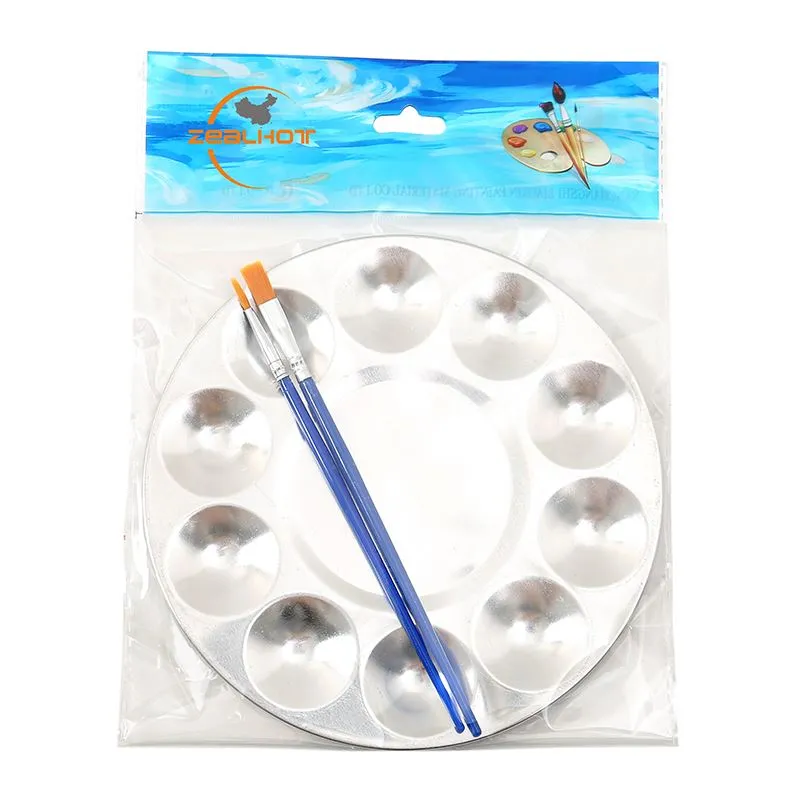
Plastic palettes
Plastic palettes are entry-level and are perfect for students or complete beginners who do not want to invest in more expensive equipment. These palettes are usually flimsy and not that much of a pleasure to paint with, but they are very affordable.
Application of Painting Palette
Oil painting
In oil painting, the palette is used not only to mix fresh pigments, but also to provide the painter with a flat working surface. The palette is designed to facilitate the painter's colour matching and creation, greatly enhancing the expression of colour during the painting process. Painters can use the palette to create preliminary colour compositions and explore the relationship between colours by mixing different colours to better understand and master the use of colour and achieve richer visual effects.
Watercolour painting
The palette is equally important in watercolour painting. Painters can mix different colours through the palette to create rich colour effects. The portability and ease of cleaning of the palette allows the artist to mix colours conveniently, even when working outdoors, to meet different creative needs.
Acrylic painting
Acrylic painting is similar to oil painting and watercolour painting in that the palette is an essential tool in the creative process. Acrylics are characterised by fast drying, so painters need to mix colours frequently. The palette provides a convenient working platform to help painters better control the colours and their creations.
Certificate

FAQ
As one of the leading painting palette manufacturers and suppliers in China, we warmly welcome you to wholesale bulk customized painting palette from our factory. All our products are with high quality and competitive price. Contact us for pricelist.
Watercolor Paint, Best Palette for Oil Painting