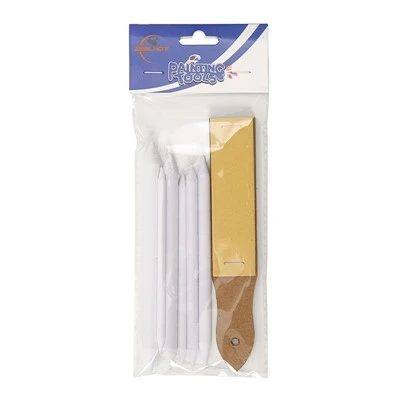
What is the absorbency of sponge brushes?
Leave a message

Hey there! As a supplier of sponge brushes, I often get asked about what the absorbency of sponge brushes is. Well, let's dive right into it and break it down in a way that's easy to understand.
First off, absorbency in sponge brushes refers to how much liquid or paint a sponge brush can soak up. It's a crucial factor, especially for artists, DIY enthusiasts, and professional painters. You see, a sponge brush with good absorbency can hold more paint, which means fewer dips into the paint container. This not only saves time but also makes the painting process smoother.
There are several factors that affect the absorbency of sponge brushes. One of the main ones is the material of the sponge. Different types of sponges have different pore sizes and densities. For example, natural sponges tend to have irregular pores, which can vary in size. These pores can hold a decent amount of liquid, but the absorbency might not be as consistent as some synthetic sponges.
Synthetic sponges, on the other hand, are often engineered to have more uniform pore sizes. This uniformity allows for more predictable absorbency. Some synthetic sponges are designed with a high - density structure, which can hold a large volume of paint. They're great for tasks that require a lot of coverage, like painting large walls or furniture.
Another factor is the shape and size of the sponge brush. A larger sponge brush generally has more surface area, which means it can absorb more paint. However, the shape also matters. A flat - shaped sponge brush might spread the paint more evenly, while a round or pointed one can be better for detailed work. The absorbency of these different shapes can vary depending on how they're used.
Let's talk about some of the products we offer. We have the Seal Painting Sponge Brush for Blending. This brush is specifically designed for blending paint. Its absorbency is carefully calibrated to pick up just the right amount of paint for smooth blending. The sponge material is soft and porous, allowing it to hold enough paint to cover a decent area without over - saturating the surface.
Then there's the Foam Paint Brush Roller. This is a great option for larger painting projects. The roller part is made of a high - absorbency foam. It can soak up a significant amount of paint, and the rolling action helps to spread the paint evenly across the surface. It's perfect for painting floors, ceilings, or large pieces of furniture.
Our Foam Brush Sponge is a versatile option. It comes in different sizes and can be used for a variety of tasks, from small touch - ups to larger painting jobs. The foam material has excellent absorbency, and it can hold paint well even when used for detailed work.
Now, how can you test the absorbency of a sponge brush? One simple way is to dip the brush into a container of paint and then lift it out. Observe how much paint it holds. You can also try painting a small area and see how far the paint on the brush goes. A brush with good absorbency should be able to cover a reasonable area without drying out too quickly.
It's also important to consider the type of paint you're using. Different paints have different viscosities. Thicker paints might not be absorbed as easily as thinner ones. For example, oil - based paints are generally thicker than water - based paints. A sponge brush that works well with water - based paints might not perform as well with oil - based ones. So, when choosing a sponge brush, you need to think about the type of paint you'll be using.


In addition to paint, sponge brushes can also be used with other liquids, like stains, varnishes, and adhesives. The absorbency requirements for these substances can vary. For stains, you might want a brush that can hold a small amount of liquid for a more controlled application. Varnishes, on the other hand, might require a brush with higher absorbency to cover a larger area quickly.
Maintenance of sponge brushes can also affect their absorbency. If a brush is not cleaned properly after use, the paint or other substances can clog the pores of the sponge. This reduces the brush's ability to absorb liquid. To keep your sponge brushes in good condition, make sure to clean them thoroughly after each use. You can use warm soapy water to remove the paint, and then let the brush dry completely before storing it.
As a supplier, we're always looking for ways to improve the absorbency of our sponge brushes. We work with different manufacturers to develop new materials and designs. We test our products rigorously to ensure that they meet the needs of our customers. Whether you're a professional painter or a hobbyist, we have a sponge brush that's right for you.
If you're interested in our sponge brushes and want to learn more about their absorbency or place an order, feel free to reach out. We're here to help you find the best sponge brush for your project. We can also provide samples so you can test the absorbency for yourself. Don't hesitate to start a conversation with us about your specific requirements. We're confident that our products will meet your expectations.
References
- General knowledge of sponge brush technology and paint application
- In - house product testing and development data