How to create a monochromatic painting with gouache color paint?
Leave a message

Hey everyone! I'm a supplier of gouache color paint, and today I'm super stoked to share with you all the ins and outs of creating a monochromatic painting using gouache. Monochromatic paintings, with their single - color palette, can be both stunningly simple and incredibly expressive. So, let's dive right in!
Getting to Know Your Gouache Paints
First things first, you've gotta understand what gouache is all about. Gouache is a type of water - based paint that's opaque, which means it sits on top of the paper and provides good coverage. It's a bit like Watercolor Paint, but it isn't as transparent. This opacity makes it perfect for creating bold and bright monochromatic artworks.
If you're new to gouache, you might be wondering how it's different from other types of paints. Well, compared to Acrylic Paint Color, gouache dries quicker and can be re - moistened when it's dry. That gives you a lot of flexibility while painting since you can easily correct mistakes or add more layers. And unlike Watercolor Solid Paint, you don't have to worry as much about the color bleeding or the paint being too thin.
Gathering Your Supplies
Before you jump into painting, you need to gather the right supplies. Here's what you'll need:
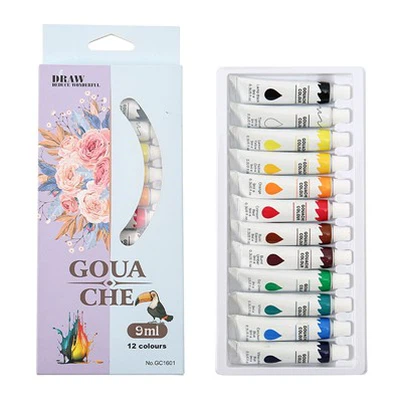
- Gouache Paint: Obviously, you'll need a gouache paint set. You can choose a single color or a set that has different tones of the same color for your monochromatic painting.
- Brushes: A variety of brushes is essential. You'll need small brushes for detailed work and large brushes for covering bigger areas.
- Paper: Thick watercolor paper works great with gouache because it can handle multiple layers of paint without warping.
- Palette: You'll need a palette to mix your paints. A simple plastic or porcelain palette will do the job.
- Water Container: Keep a container of clean water nearby to rinse your brushes.
Picking Your Color
The key to a successful monochromatic painting is to choose a color that you love. You can go for a classic color like black, white, or gray, which are timeless and always look sophisticated. Or, if you want something more eye - catching, you can pick a bright color like red, blue, or yellow.
Once you've chosen your base color, you'll want to create different tones and shades of it. Tones are created by adding gray to your base color, while shades are made by adding black. Highlights, on the other hand, are created by adding white. Having a range of tones, shades, and highlights will give your painting depth and dimension.
Preparing Your Workspace
Setting up a proper workspace is crucial. Find a well - lit area where you'll be comfortable spending a couple of hours. Lay out your supplies in an organized way so that you can easily reach for what you need. Make sure your palette is clean and your brushes are ready to use.
Sketching Your Design
Before you start applying the paint, it's a good idea to sketch your design on the paper. You can use a pencil for this. Sketch out the basic shapes and composition of your painting. Don't worry about making it perfect; this is just a guide for your painting. You can start with simple shapes like circles, rectangles, and triangles and then build up to more complex forms.
Mixing Your Colors
Now, it's time to mix your colors. Squeeze a small amount of your base color onto the palette. To create different tones, add a bit of gray paint to the base color and mix it well. You can start with a small amount of gray and keep adding more until you get the tone you want.


To create shades, add a tiny bit of black to the base color. Be careful not to add too much black at once, as it can quickly overwhelm the color. And for highlights, add white to the base color. You can create a range of different highlights depending on how much white you add.
Applying the Paint
Start by applying a light layer of your base color all over the paper. This is called a wash, and it helps to create a unified background for your painting. Use a large brush and make smooth, even strokes. Let the wash dry completely before you start adding more details.
Once the wash is dry, start adding the darker tones and shades. Use a smaller brush for this and focus on the areas where you want to create depth. For example, if you're painting an object, the areas that are in shadow will need a darker shade of your color.
As you add more layers, you can start building up the details. Use a very small brush to add fine details like lines, dots, or small shapes. You can also add highlights to the areas that are catching the light.
Blending and Smoothing
One of the great things about gouache is that you can blend and smooth the paint easily. If you want to blend two colors together, use a clean, damp brush and gently brush over the area where the two colors meet. This will help to create a smooth transition between the colors.
If there are any rough edges or uneven areas in your paint, you can use a damp brush to smooth them out. Just make sure the paint is still wet enough to be manipulated.
Adding Final Touches
Once you're happy with the main part of your painting, it's time to add some final touches. You can add some more highlights to make the painting pop, or you can add a bit of texture using a dry brush technique. A dry brush technique involves dipping a dry brush into a small amount of paint and then brushing it over the paper in a light, stippling motion.
Troubleshooting Common Problems
Sometimes, things don't go as planned when you're painting. Here are some common problems you might encounter and how to fix them:
- Paint is too thick: If the paint is too thick, add a little bit of water to it and mix it well. You can also use a palette knife to scrape off some of the excess paint.
- Paint is too thin: If the paint is too thin, it might not have enough coverage. Add a bit more of the paint to your palette and mix it thoroughly.
- Bleeding edges: If the paint is bleeding, it could be because the paper is too wet. Make sure the paper is dry before you start applying more paint. You can also use a blotting paper to soak up any excess moisture.
Conclusion
Creating a monochromatic painting with gouache color paint is a fun and rewarding experience. With the right supplies, a bit of practice, and a creative mindset, you can create some truly amazing artworks. Whether you're a beginner or an experienced artist, gouache offers a lot of possibilities for monochromatic painting.
If you're interested in purchasing high - quality gouache color paint for your next project, feel free to reach out for a procurement discussion. I'm here to help you find the perfect colors for your artistic endeavors.
References
- "The Complete Guide to Gouache Painting" by an unnamed author
- "Understanding Monochromatic Color Schemes in Art" from an art magazine