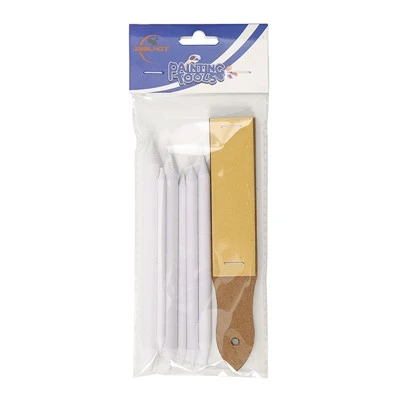
What is the function of a pottery clay burnishing tool?
Leave a message

Hey there, fellow pottery enthusiasts! As a supplier of pottery clay tools, I've had the privilege of seeing firsthand how different tools can transform the pottery - making process. Today, I'm gonna talk about one of those nifty tools: the pottery clay burnishing tool.
So, what's the deal with a pottery clay burnishing tool? Well, let's start from the basics. Burnishing is an age - old technique used in pottery. It's been around for ages, with archaeological evidence showing that ancient civilizations like the Egyptians and Native Americans used burnishing to create smooth and shiny surfaces on their pottery.
The main function of a pottery clay burnishing tool is to create a smooth and polished surface on the clay. When you use a burnishing tool on wet or leather - hard clay, it compresses the clay particles together. This compression makes the surface of the clay denser, which in turn gives it a smooth and shiny appearance. You know how some pottery pieces have this beautiful, almost glass - like finish? That's often the result of burnishing.
One of the cool things about burnishing is that it can be used to enhance the natural color and texture of the clay. Different types of clay have different colors, and burnishing can bring out those colors and make them more vibrant. For example, if you're working with a red earthenware clay, burnishing can make the red color pop and give it a rich, warm glow.
Another function of the burnishing tool is to add a decorative element to the pottery. You can create patterns and designs by burnishing only certain areas of the clay. Maybe you want to make a series of parallel lines or a circular pattern. By using the burnishing tool strategically, you can create these designs and make your pottery piece truly unique.
Let's talk about the different types of burnishing tools and how they work. There are several materials that burnishing tools can be made from, each with its own characteristics.
Bone burnishing tools are quite popular. Bones, usually from cows or other large animals, are naturally smooth and have a nice, rounded shape. When you use a bone burnishing tool on clay, it glides over the surface easily, creating a smooth finish. The bone also absorbs a little bit of the moisture from the clay, which helps in the burnishing process.


Stone burnishing tools are another option. Stones like agate or quartz are hard and have a smooth surface. They can create a very high - gloss finish on the clay. Stone burnishing tools are great for achieving a really shiny, professional - looking result. But you have to be careful when using them because they can be a bit abrasive if you're not gentle.
Metal burnishing tools, such as those made from brass or stainless steel, are also available. Metal tools are durable and can be used on a variety of clay types. They can create a very precise and clean burnish. However, metal tools can be a bit too harsh on softer clays, so you need to adjust your pressure accordingly.
Now, as a pottery clay tools supplier, I know that having the right tools is crucial for a successful pottery project. That's why we offer a wide range of Professional Pottery Tools. Whether you're a beginner or a seasoned pro, we've got the tools you need to take your pottery to the next level.
Our Professional Clay Sculpting Tools collection includes burnishing tools along with other essential tools for shaping and carving clay. These tools are made from high - quality materials and are designed to last.
If you're looking for something a bit more unique and artisanal, check out our Artisan Pottery Tools. These tools are hand - crafted and have a special touch that can add an extra element of creativity to your pottery.
When using a burnishing tool, there are a few tips and tricks that can help you get the best results. First of all, make sure your clay is at the right stage. Burnishing works best on leather - hard clay, which is when the clay is still slightly moist but firm enough to hold its shape. If the clay is too wet, the burnishing tool will just smear the clay around. If it's too dry, the clay may crack or crumble when you try to burnish it.
Secondly, use a lubricant. You can use water, olive oil, or a special burnishing lubricant. The lubricant helps the burnishing tool glide over the clay surface more easily and prevents it from sticking. Just apply a small amount of the lubricant to the clay and the burnishing tool before you start.
Finally, be patient. Burnishing takes time and practice. Don't expect to get a perfect finish on your first try. Keep practicing, and you'll gradually get better at it.
In conclusion, the pottery clay burnishing tool is a versatile and essential tool for any potter. It can transform a simple clay piece into a work of art by creating a smooth, polished surface and adding decorative elements. Whether you're into traditional pottery or more modern, experimental styles, a burnishing tool can be a great addition to your toolkit.
If you're interested in purchasing high - quality pottery clay tools, including burnishing tools, feel free to reach out. We're always happy to help you find the right tools for your needs and answer any questions you might have. Let's start a conversation about how we can help you take your pottery projects to new heights.
References
- "The Complete Potter's Handbook" by Mark Hewitt
- "Pottery: A Comprehensive Guide" by Susan Peterson