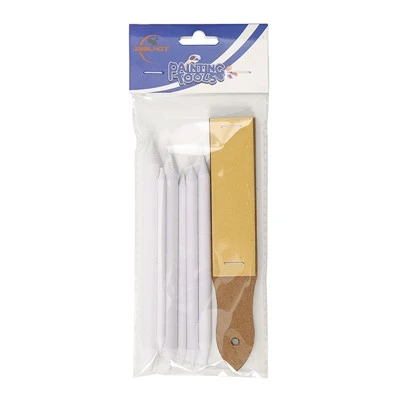
Do sponge brushes work well with gouache paint?
Leave a message

Do sponge brushes work well with gouache paint? This is a question that many artists, hobbyists, and even professional painters often ponder. As a supplier of high - quality sponge brushes, I've had the privilege of seeing these tools in action across various painting mediums, and gouache paint is no exception. In this blog, I'll delve into the compatibility of sponge brushes with gouache paint, exploring their advantages, limitations, and best - use scenarios.
The Nature of Gouache Paint
Before we discuss the effectiveness of sponge brushes with gouache paint, it's essential to understand the characteristics of gouache itself. Gouache is a water - based paint that contains pigment, a binder (usually gum arabic), and sometimes additional additives. Unlike watercolor, which is more transparent, gouache is opaque, allowing for layers of paint to be built up and for areas to be easily corrected. It dries relatively quickly, and its matte finish gives a rich, velvety look to the final artwork. The consistency of gouache can vary, from thin and fluid to thick and creamy, depending on how much water is added.
Advantages of Using Sponge Brushes with Gouache Paint
1. Excellent Coverage
One of the significant advantages of using sponge brushes with gouache paint is their ability to provide excellent coverage. The porous nature of the sponge allows it to hold a large amount of paint. When you dip a sponge brush into gouache, it soaks up the paint like a sponge (quite literally). This means that you can cover a large surface area in a relatively short time. Whether you're painting a background for a landscape or filling in large sections of a still - life painting, a sponge brush can quickly lay down a solid layer of gouache. For instance, if you're working on a large - scale mural with gouache, a Round Sponge Paint Brush can help you cover the canvas efficiently.
2. Blending and Softening Edges
Sponge brushes are also great for blending and softening the edges of gouache paint. Since gouache is opaque, it can sometimes create harsh lines when applied with traditional brushes. However, a sponge brush can gently blend the colors together, creating a smooth transition between different hues. For example, when painting a sunset with gouache, you can use a Seal Painting Sponge Brush for Blending to blend the oranges, reds, and yellows to create a more realistic and natural - looking sky. The sponge's texture helps to break up the paint particles and mix them together, resulting in a softer, more diffused effect.
3. Textured Effects
Another benefit of using sponge brushes with gouache is the ability to create unique textured effects. The uneven surface of the sponge can leave interesting patterns on the painted surface. You can experiment with different types of sponge brushes to achieve various textures. For example, a coarse - textured sponge brush can create a rough, grainy texture, while a fine - textured one can produce a more subtle, smooth texture. This adds an extra dimension to your gouache paintings, making them more visually appealing.
4. Cost - Effective
Sponge brushes are generally more cost - effective than traditional paintbrushes. They are often sold in packs, which means you can have multiple brushes on hand without breaking the bank. This is especially beneficial for artists who are just starting out or for those who use a lot of paint and need to replace their brushes frequently. As a supplier, I've seen many customers appreciate the affordability of our sponge brushes, especially when using them with gouache, which can be an expensive medium on its own.
Limitations of Using Sponge Brushes with Gouache Paint
1. Lack of Precision
One of the main limitations of using sponge brushes with gouache is the lack of precision. Unlike traditional brushes with fine tips, sponge brushes have a broader surface area. This makes it difficult to paint fine details, such as small letters, delicate outlines, or intricate patterns. If you're working on a detailed portrait or a miniature painting with gouache, a sponge brush may not be the best tool for the job. In such cases, you may need to switch to a smaller, more precise brush.
2. Paint Absorption and Drying Issues
While the ability of sponge brushes to absorb a large amount of paint is an advantage in some cases, it can also be a drawback. Sponge brushes can hold so much paint that it may take longer for the paint on the brush to dry. This can lead to smudging or bleeding of the gouache paint on the canvas. Additionally, if you're not careful, the excess paint in the sponge can drip onto your painting, ruining the effect. To avoid these issues, you need to be more mindful of how much paint you load onto the sponge brush and how you apply it.
3. Wear and Tear
Sponge brushes tend to wear out more quickly than traditional brushes, especially when used with thick or heavy - bodied gouache paint. The constant friction of applying the paint can cause the sponge to break down over time. This means that you may need to replace your sponge brushes more frequently, which can add to the overall cost of your painting supplies.
Best - Use Scenarios for Sponge Brushes with Gouache Paint
1. Backgrounds and Base Layers
As mentioned earlier, sponge brushes are ideal for painting backgrounds and base layers with gouache. They can quickly cover large areas, providing a solid foundation for the rest of your painting. For example, if you're painting a seascape, you can use a sponge brush to paint the sky and the sea in broad strokes. This allows you to establish the basic color scheme and composition of your painting before adding more details.
2. Blending and Color Mixing
Sponge brushes are also great for blending and color mixing in gouache paintings. You can use them to create smooth gradients, soften edges, and mix different colors together. For instance, when painting a flower, you can use a Seal Painting Sponge Brush to blend the different shades of petals, creating a more realistic and three - dimensional effect.


3. Textured Artwork
If you're interested in creating textured artwork with gouache, sponge brushes are the perfect tool. You can experiment with different techniques, such as stippling or dabbing, to create unique patterns and textures on your canvas. This can add a lot of visual interest to your paintings and make them stand out.
Conclusion
In conclusion, sponge brushes can work very well with gouache paint, but they also have their limitations. They are excellent for covering large areas, blending colors, and creating textured effects, but they may not be suitable for detailed work. As a supplier of sponge brushes, I believe that these tools can be a valuable addition to any artist's toolkit when working with gouache. Whether you're a beginner or a professional painter, there are many ways to incorporate sponge brushes into your gouache painting process.
If you're interested in purchasing high - quality sponge brushes for your gouache painting projects, please feel free to contact us for more information and to discuss your specific needs. We offer a wide range of sponge brushes, including the ones mentioned in this blog, at competitive prices. Our team is always ready to assist you in finding the right tools for your artistic endeavors.
References
- "The Complete Guide to Gouache Painting" by an unknown author
- "Art Supplies Handbook" published by a well - known art supply company